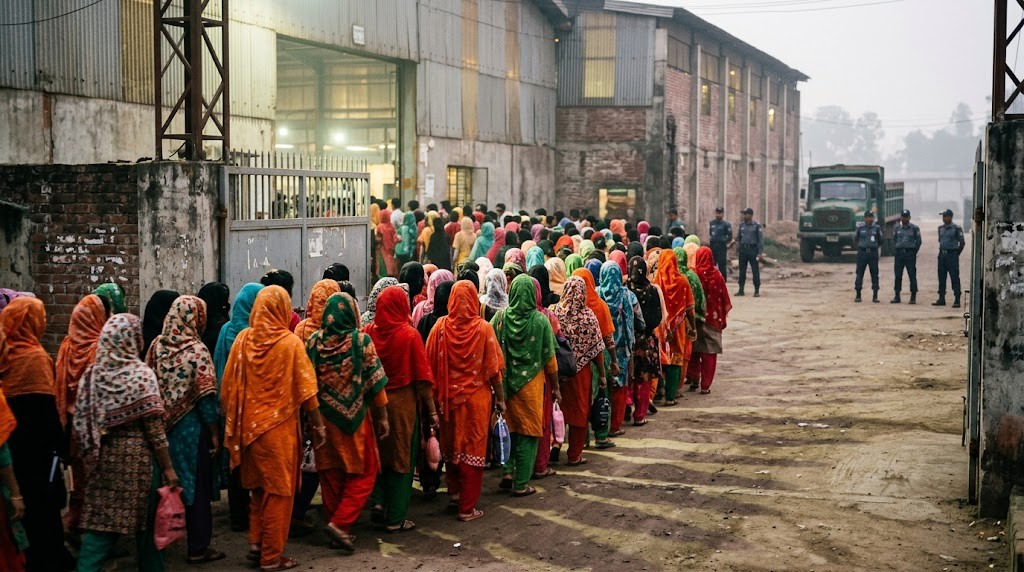
Garment factories reopened on Monday, 2 November, a day after protests over wages shut 529 factories. The calm did not hold everywhere. Police fired tear gas at workers trying to block roads in Dhaka after protesters threw bricks and stones, and used tear gas and water cannon in Ashulia, Reuters reported. Border Guard Bangladesh personnel were deployed in Gazipur, where workers also tried to block a major highway.
Workers want the minimum monthly wage raised to Tk 30,000 from Tk 12,500. The government formed a six-member minimum wage board on Sunday to review the demand. Babul Akhter, general secretary of the Bangladesh Garment and Industrial Workers Federation, sits on the board as a workers’ representative. The other members and a timeline for its review have not been reported.
What each side is saying
- Workers: Babul Akhter told Reuters that Bangladesh has among the lowest garment wages in the world, and that owners should negotiate better prices with buyers.
- Owners: BGMEA President Mahmud Hasan Khan asked workers to let the board finish its work. He warned that if protests force factories to shut, a “no work, no pay” rule would apply.
- Government: Home Affairs Minister Salahuddin Ahmed said people “acting against workers’ interests under the guise of labour protests” would be dealt with firmly.
- Local administration: In Kaliakair, Gazipur, the upazila administration and municipality issued a public notice asking house and flat owners to tell police if tenants are sheltering outsiders or members of criminal groups, Prothom Alo reported.
Why it matters
Garments earn more than 80 percent of Bangladesh’s exports and employ about 4 million people, according to Reuters. Owners point to higher costs, energy uncertainty and slowing demand in key markets; workers say the current Tk 12,500 minimum is among the lowest garment wages in the world. Dhaka University economist Selim Raihan told Reuters that a phased wage adjustment, better productivity and fairer pricing from international buyers are all needed.
For organisations working with garment workers, the next steps to watch are the board’s first meeting, whether its full membership is published, and whether the “no work, no pay” warning turns into lockouts. Tenant reporting rules in Kaliakair may also affect migrant workers who share rented rooms.
Earlier: Wage board formed, but garment protests spread to Mirpur, Savar and Ashulia.
Sources
- Reuters via ThePrint: Bangladesh garment factories reopen, fresh clashes keep industry on edge, 2 November 2026
- Prothom Alo (in Bangla): Kaliakair house owners told to report outsiders, 2 November 2026
Image: AI-generated illustration, not a photograph of the events described.
Spotted an error? Tell us and we will correct it. Read our editorial standards.