From the sector
Rohingya refugee women in Cox’s Bazar produced and distributed 14,666 reusable menstrual hygiene kits across 13 camps after funding cuts left many women and girls without supplies, the aid group Acted said on 28 October.
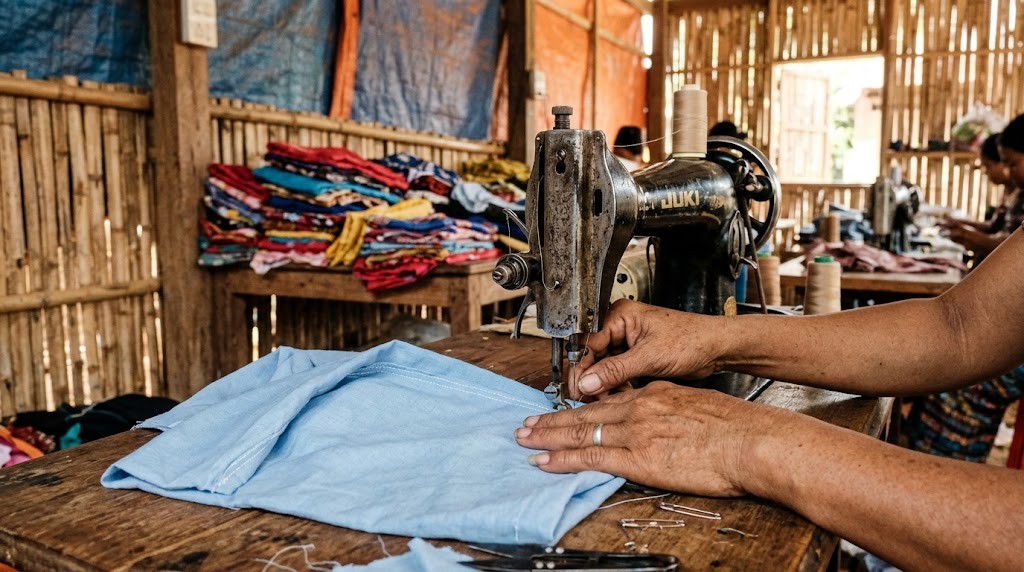
The 12-month project, which began in July 2025, trained women in professional sewing and paid them to make the kits locally, Acted said in an update published on ReliefWeb. It was funded by the French foreign ministry’s Crisis and Support Centre (CDCS).
The numbers
- 52 Rohingya women trained in sewing and kit production, joined by 32 workers trained under an earlier project
- 15,056 kits produced, including 120,448 reusable sanitary pads and 45,168 pieces of underwear
- 14,666 kits distributed to women and girls in 13 camps
- 98% of the women said they could make the kits without supervision; all post-distribution survey respondents were satisfied or very satisfied with the kits, according to Acted
How it worked
Acted reopened a production centre in Ukhiya set up under a previous project. Trainees learned fabric selection, cutting, stitching and machine maintenance, and were paid under the government’s cash-for-work guidelines. Those who completed the training moved on to paid production roles at a higher rate.
Acted said cuts to hygiene and non-food assistance since early 2025 had left many households in the camps without reliable access to menstrual supplies, while very few women had chances to earn an income.
Why it matters
With the 2026 Rohingya appeal a quarter smaller and still underfunded, agencies are looking for ways to stretch aid further. Making reusable supplies inside the camps combines a WASH need with paid work for women, two gaps UNFPA’s latest report also highlights. Reusable kits can last longer than disposable supplies, though the results here are self-reported by the implementing agency.
What to watch
Whether the model is funded beyond the current project, whether trained women find further paid work, and whether other agencies adopt local production of hygiene items in the camps.
From the sector: this story is based on an update from Acted. This story draws on reports published on ReliefWeb, the humanitarian information service run by the UN Office for the Coordination of Humanitarian Affairs (OCHA). Image: an illustration generated with Google Gemini. It is not a photograph.
Sources
- From Skills to Self-Reliance: Supporting Rohingya Refugee Women in Cox’s Bazar, Bangladesh, Acted, via ReliefWeb, 28 October 2026
Topics: coxs bazar · gender equality · humanitarian rohingya response · wash
Spotted an error? Tell us and we will correct it. Read our editorial standards.