Bangladesh needs about Tk 17,000 crore (about US$1.4 billion) to carry out its Health National Adaptation Plan for 2026-2031, according to a study by BRAC University’s Centre for Climate Change and Environmental Research (C3ER) released in Dhaka on 17 October.
The plan is meant to protect people from extreme heat, climate-sensitive diseases, unsafe water and disruptions to essential health services, The Business Standard reported.
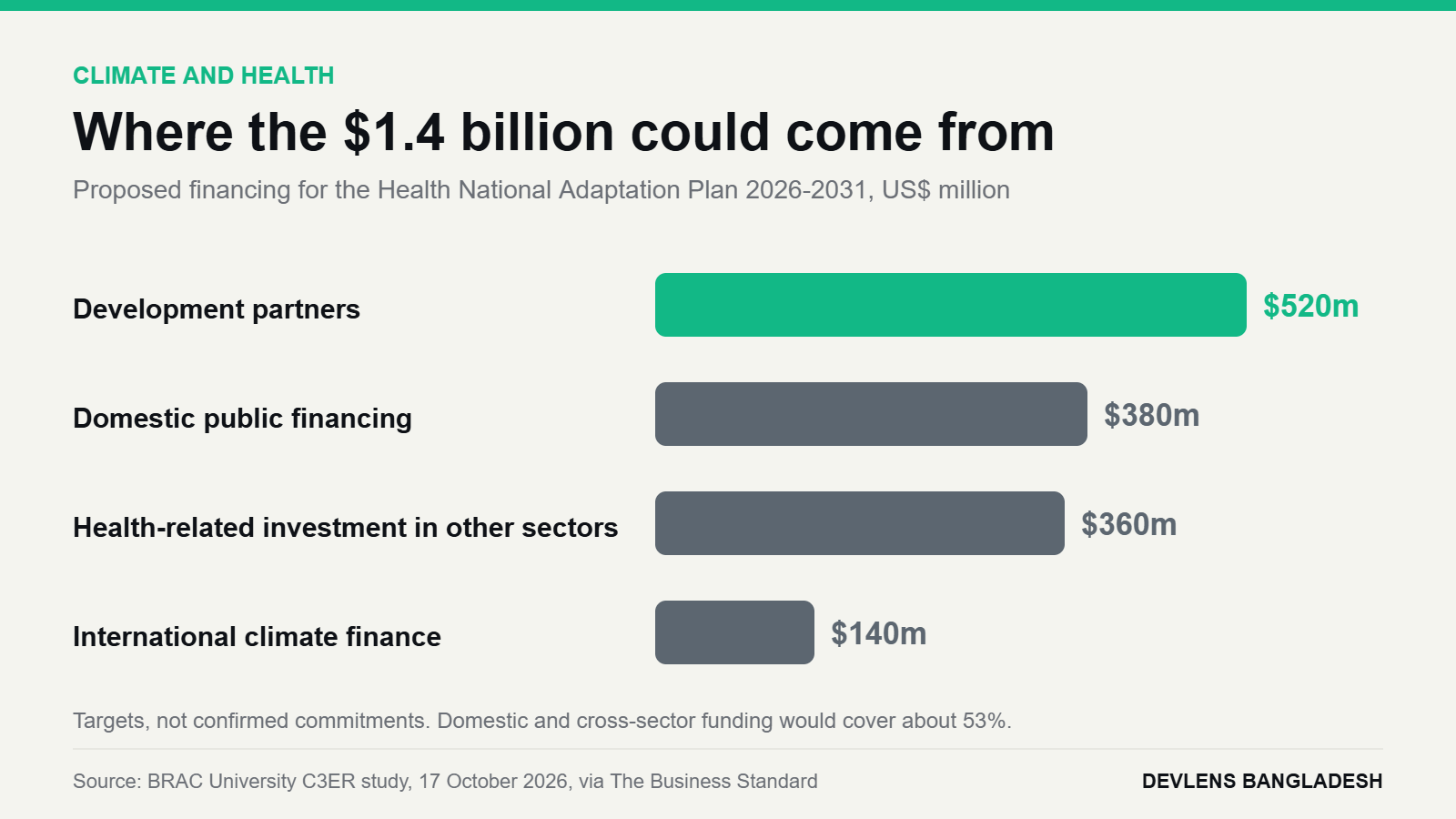
Where the money would come from
- US$520 million from development partners
- US$380 million from domestic public financing
- US$360 million from health-related investment in other sectors
- US$140 million from international climate finance
The study presents these figures as targets, not confirmed commitments. Domestic and cross-sector sources would cover about 53% of the total.
Four priorities take most of the budget
Four areas account for US$966 million, or 69% of the framework:
- US$350 million for resilient, low-carbon health infrastructure, technologies and supply chains
- US$266 million for integrated risk monitoring, early warning and emissions tracking
- US$210 million for a climate-smart health workforce
- US$140 million for leadership and governance
Prof Iqbal Kabir, director of the Centre for Climate Change and Public Health, said the funding was needed to implement the plan and reduce the health effects of climate change. Ainun Nishat, emeritus professor at BRAC University and adviser to C3ER, said climate-related health risks must be built into development planning and financing.
Why it matters
Almost half of the plan’s money is expected to come from outside the national budget. The study names the World Bank, UNICEF, the World Food Programme, WHO and UNFPA among development partners, and the Green Climate Fund, the Adaptation Fund and the Least Developed Countries Fund among climate funds. Organisations working on health, WASH and climate resilience can use the plan’s four priorities to shape proposals and partnerships.
What to watch
Whether the health ministry, the Economic Relations Division and the Planning Commission build the plan into budgets, and whether development partners make firm commitments against the US$520 million target.
Main image: an illustration generated with Google Gemini. It is not a photograph.
Sources
- Bangladesh could mobilise $1.4b to tackle climate-related health risks: Experts, The Business Standard, 17 October 2026
Topics: climate disaster resilience · climate change · health · health nutrition · health support · national
Spotted an error? Tell us and we will correct it. Read our editorial standards.